

SNAP E&T: Appalachia
Welcome to All Things SNAP Employment & Training
This year, prepare your organization to become a SNAP E&T provider. We invite you to join us in the 2026 SNAP E&T Technical Assistance Cohort, designed for organizations based across the Appalachian region.
The SNAP E&T Cohort Application is Open! Those who attended the Government Partnerships for a Strong Workforce convening in Huntington, WV are eligible to apply. Your E&T Self-Assessment will be uploaded as part of the application submission. Click Here to read the Cohort Overview Details.
If you’re ready to apply to the cohort, Click Here to access the SNAP E&T Appalachia Cohort Application portal. Please reach out to Samantha if you have questions, need assistance or would like to follow up.
____________________________________________________________________
Appalachia Cohort Resource & Landing Page
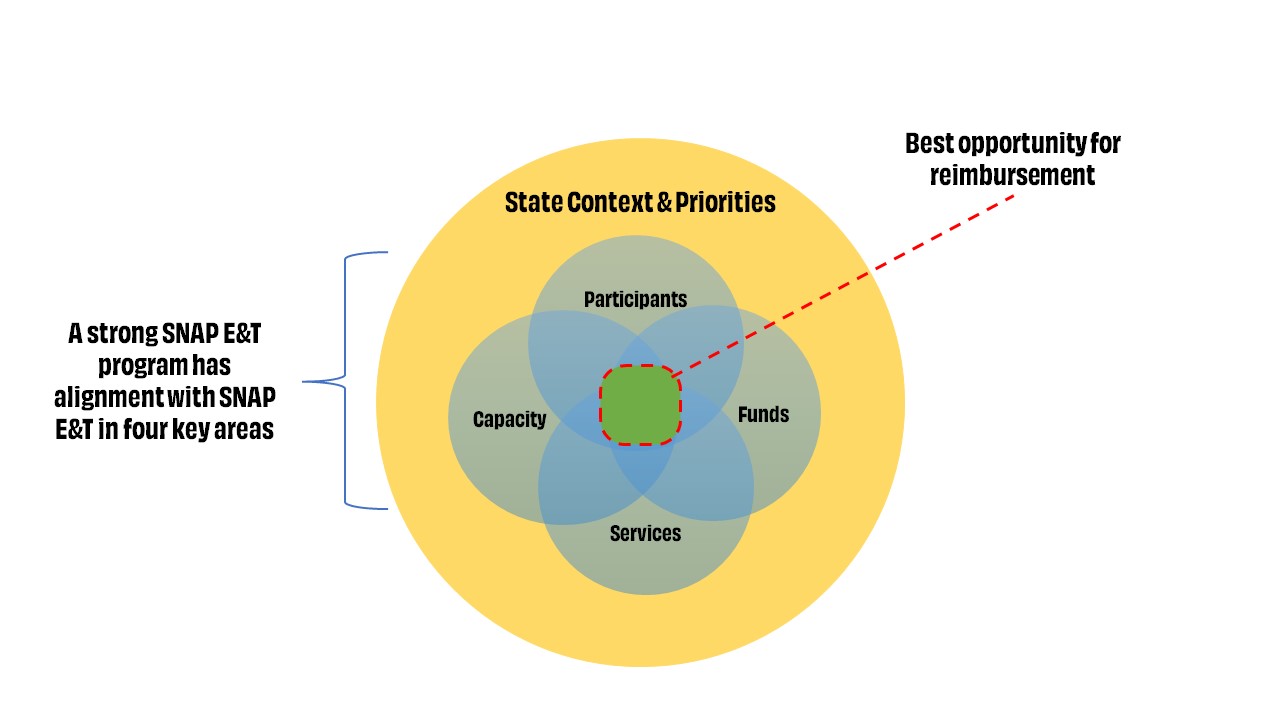
This SNAP E&T tools and resources page houses recorded webinars, a range of SNAP E&T tools, templates and best practices. The resources are organized based on the five main components of SNAP E&T alignment: services, organization capacity, funding and participant eligibility.
Please see the Cohort training schedule here. Resources and recordings will be posted as we make our way through the cohort. All Cohort trainings occur monthly at 2:00pm-3:00pm EST, if you need the invite forwarded to you, please request it here.
March 18 2025 Welcome & Cohort Kick Off
Welcome to our fifth SNAP E&T Cohort! We will get to know each other and the technical assistance team. We will review SNAP E&T basics and walk through what we have planning for our time together. Recordings, slide decks and materials will be linked here as we make our way through the cohort.
March 25 2026 SNAP E&T Services: Mapping
SNAP E&T offers a broad array of employment services including case management. These are categorized into “components”. You are likely offering these services within your program in some capacity. This session will help you map your current programming into these component buckets.
April 22 2026 SNAP E&T Participants: Eligibility, Screening & Referral
Does your program currently serve people who meet the eligibility criteria for SNAP E&T participation? In this session we’ll review general SNAP and SNAP E&T eligibility criteria, how referrals can work with your administering agency and examples from current programs
May 27 2026 SNAP E&T Capacity: Staff Mapping
Does your organization have the infrastructure and staffing in place in order to fulfil the administrative and programmatic requirements for SNAP E&T? Dive into the aministrative processes to track participation, services delivered, and verify SNAP E&T eligibility and identify capacity or training needs.
June 24 2026 SNAP E&T Fiscal: Funding Basics & Allowable Costs
This session will walk through the difference between federal and non-federal funds by providing examples. We will discuss the three types of SNAP E&T funds, how they’re administered, the basics of allowable costs, and the mechanics of how these dollars come to your organization.
July 22 2026 Tying It All Together & Cohort Wrap Up
You made it! This is the final formal training session of the cohort. We’ll discuss the annual SNAP E&T cycle, external factors to consider, and tie all the alignment areas together. You’ll hear what resources are available to you and how to stay engaged with us.
August 19 2026 Optional Drop In Hour
An optional open office hour for the cohort to share updates, ask questions, collaborate together. Connect with peers and strategize together as a team during our last opportunity to meet together in an unstructured space. We love to hold space to keep everyone engaged, regardless of where you’re at in the E&T timeline.
SNAP E&T offers a broad array of services including case management, which are categorized into SNAP E&T Components. You are likely offering these services within your program in some capacity. Use the tools here to assess alignment with your current program offering and allowable E&T services.
SNAP E&T Components:
- Supervised job search
- Job search training
- Workfare
- Work experience
- Education
- Self-employment training
- Job retention
SNAP E&T Support Services Can Include:
- Dependent care
- Transportation
- Books & Supplies
- Clothing and Uniforms
- Hygiene Supplies
The resources below can be helpful to determine where your program has SNAP E&T alignment and where adjustments can be made. The PDF will guide you through the process, the Word Document the editable tool that you can fill in with your team. The Provider Readiness Roadmap includes these tools as part of an initial assessment for SNAP E&T alignment. The FNS Components Table is also linked here. This is an official policy document from FNS that lists and defines the full range of components available to be offered through state SNAP Employment and Training (SNAP E&T) programs.
Does your program currently serve people who meet the eligibility criteria for SNAP E&T participation? Are your services generally aligned to meet their needs and address their employment barriers?
Eligibility requirements for SNAP E&T enrollment are:
- Participant is receiving SNAP benefits
- Participant is not receiving TANF cash benefits
- Participant is willing and able to work post program completion
The resources below can help you understand more about SNAP E&T participants and tools that might helpful if you become a SNAP E&T provider. Links will be updated as we make our way through the Cohort.
Does your organization have the infrastructure and staffing in place in order to fulfil the administrative and programmatic requirements for SNAP E&T? Assess general administrative processes to establish capability to track participation, services delivered, and verify SNAP E&T eligibility. Capacity indicators include:
- A programmatic data tracking system that is already tracking participant activity and outcomes
- A fiscal data tracking system that has the ability to track non-federal revenue and tie it to appropriate expenses
- Adequate staffing who perform key roles (both on the services and administrative side)
Use the tools below to help determine administrative capacity based on staff function and role.
There are three main funding streams for SNAP E&T: 100% funds, 50/50 funds and ABAWD Pledge Funds. We will focus on the 50/50 funds in this resource
SNAP E&T third party providers providers can receive up to 50% cost reimbursement when using eligible non-federal funds to provide employment services to SNAP E&T participants. These funds cover administrative and direct program expenses as well as participant reimbursements/support services provided to participants. These 50/50 funds are not capped, meaning reimbursement potential is tied the number of eligible participants served and amount of non-federal funds used to deliver services, but is otherwise unlimited in potential. Examples of eligible non-federal funding includes: State, County or local funds, philanthropic funds, and social enterprise revenues. Below are some resources related to SNAP E&T funding.

Within the 50/50 reimbursement model, you will incur costs while providing services to SNAP recipients, some of those costs will be reimbursable and some will not. See below for details and examples of allowable costs:
Allowable administrative costs can include:
-
- Staff salaries and benefits for time involved in SNAP E&T administration, support and operations
- Office equipment, supplies, postage, and copying/printing costs
- Lease or building rental costs
- Travel expenses incurred to carry out SNAP E&T tasks and contract requirements
Allowable participant reimbursements / supportive services for participants that are reasonably necessary and directly related to participation in an E&T program can include:
-
- dependent care
- transportation
- digital technology
- books, supplies, clothing and uniforms
- personal safety and hygiene items
Indirect costs that support allowable E&T activities are also reimbursable and include:
-
- Staff that support general office administrative functions
- Financial staff that handle all billing activities
- General building maintenance and utility expenses
